SRH vs DRH: suction hose vs discharge hose
Two words, one letter — very different builds. Here's what changes inside a steel-wire dredge hose and why it matters.
SRH — built against vacuum
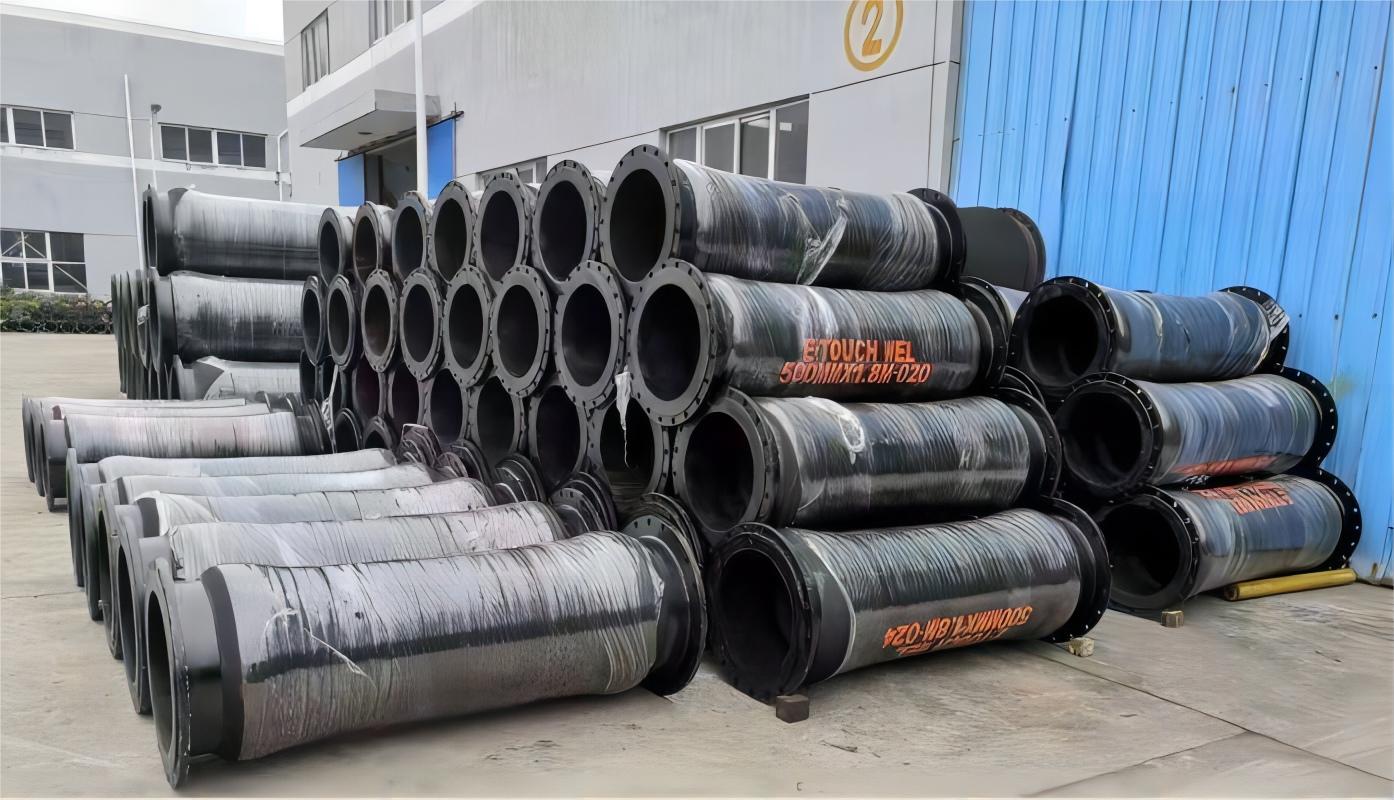
Sand suction hose uses high-strength spiral steel wire so the bore cannot collapse at -0.8 bar, with a 10–22 mm wear-resistant NBR liner that grows in thickness with the bore.
Typical positions: jet suction dredger suction head, pump inlet vibration damping, negative-pressure sections and booster pump inlets.
DRH — built against pressure
Sand discharge hose runs at 1.0–2.5 MPa with burst pressure at 3× working. Steel-wire versions also handle suction; fabric braid versions optimise weight and cost on discharge-only lines.
Typical positions: sand dredger discharge line, sand pump outlet, submersible slurry pump discharge, tailings transport, bends and inclines.
Shared DNA
Both come in DN 150–600 (custom to φ1600 mm), in 1–12 m lengths, with flanged, plain-end or steel-sleeve terminations and a weather/ozone/seawater resistant cover.
Need this specced for your site?
Send diameter, working pressure and deployment environment — we reply with a matched solution within 24 hours.
Get A Matched Solution